Ethereum Classic (ETC) is a cryptocurrency based on the Etchash algorithm and a continuation of the original Ethereum blockchain. Following Ethereum’s transition to Proof-of-Stake, ETC remains one of the few major coins available for Proof-of-Work mining.
Mining equipment
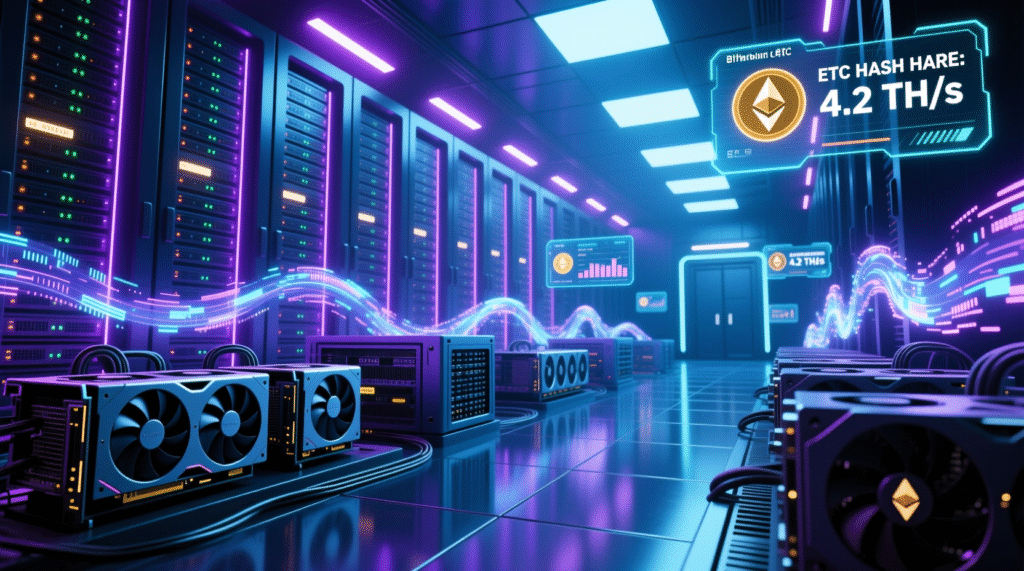
For efficient ETC mining, it’s recommended to use graphics cards (GPUs) with at least 4GB of memory. CPU-based mining is inefficient. Popular GPU models for ETC mining include:
- NVIDIA: RTX 3060, 3070, 3080, 3090
- AMD: RX 5700, RX 6700 XT, RX 6800
- ASIC miners optimized for the Etchash algorithm are also available, such as the Goldshell Mini-DOGE Pro and iBeLink BM-K1 Plus.
Mining software
The following programs can be used for ETC mining on GPU:
- T-Rex Miner – suitable for NVIDIA cards.
- lolMiner is optimal for AMD cards.
- GMiner is a universal miner for both platforms.
To set up mining, you need to create a .bat file specifying the pool address, your wallet, and the name of the mining device.
Choosing a mining pool
For a stable income, we recommend joining a mining pool. Popular ETC mining pools include:
- 2Miners offers low fees and stable payouts.
- F2Pool is one of the largest pools that supports ETC.
- Ethermine is popular among Ethereum Classic miners.
When registering in the pool, please provide your ETC address to receive rewards.
ETC wallets
The following wallets can be used to store mined coins:
- Trust Wallet is a mobile wallet that supports ETC.
- MetaMask is a browser extension that allows you to connect to the ETC network.
- Binance, KuCoin, and Gate.io are cryptocurrency exchanges that support ETC.
- It is recommended to use wallets that support the Ethereum Classic standard to ensure the security of your funds.
Profitability assessment
To estimate your potential profit from ETC mining, you can use calculators like WhatToMine. When calculating, consider parameters such as your hardware’s hashrate, electricity costs, and the current network difficulty.